
Concrete & Heavy
Concrete & Heavy Debris in Roanoke
Driveway breakouts, porch piers, block, brick and crawlspace spoil. Small box, loaded flat and low, and a real conversation about where it sits, because this valley is karst and a loaded container is a point load.
Heavy debris is a weight problem wearing a volume problem’s clothes. Broken concrete, brick, block, mortar, stone and tile bedded in a mortar bed are several times denser than the mixed household material people picture when they imagine a roll-off, so a container reaches its lawful payload while the sides are still plainly visible. That is the container working correctly rather than the container being too small. The rule that goes with it is short: load flat, load low, spread the material across the whole floor rather than heaping it at the door end, keep the pieces to a size two people can place rather than one person can drop, trim rebar and mesh back below the rim, and stop at the marked fill line. A 10 yard loaded that way leaves your property legally. The same rubble in a 30 gives you a box that cannot move at all.
Where the box sits matters more in this valley than almost anywhere else, and the reason is under your feet. The Roanoke Valley lies in Virginia’s karst belt, which means soluble carbonate rock with caves, springs and sinkholes in it. Roanoke County publishes its own karst areas dataset built from mapped sinkholes, so this is a local engineering fact rather than a geology lesson. Virginia Energy, the state geological authority, puts the financial consequence plainly: subsidence “is generally not covered by a standard homeowner’s insurance policy.” A loaded container is several tons resting on four small contact points, which is a concentrated load on ground that may be bridging a void. We look at the ground as well as the grade, we board every set, and on a heavy job we will suggest the flattest, most solid spot on the property even if it means a longer carry. See Virginia Energy on the geology.
Grade compounds it. Roanoke sits on a valley floor between Mill Mountain, Read Mountain, the Blue Ridge and the Allegheny ridges, and a great many driveways in South Roanoke, Grandin Court, Deyerle, Crystal Spring, Garden City and Cave Spring are cut into a hillside. Roll-off delivery is a gravity operation: the box comes off the rails under its own weight and the cable has to pull it back up once it is loaded. With concrete in it, that recovery is the hardest thing the truck does all day. A short container is easier to place, easier to recover and safer standing still, which is why on heavy jobs we default to the 10 even where the volume would justify something larger. Read steep driveway delivery before you choose a spot, and expect us to walk it with you.
Soil and clean fill are a separate conversation from masonry rubble, so tell us at booking roughly what the split is. Excavation in karst country is unpredictable in a way flat markets never see: you hit rock where the plans showed soil, and voids where they showed rock, so the spoil coming out of a footing trench here is rarely what the estimate assumed. Crawlspace work adds its own version. Between old vapor barrier, damp spoil, masonry piers and the termite-rotted sill plate that so often comes with them, a crawlspace repair produces a load that is heavy, wet and awkward all at once. Roanoke City, Roanoke County, Vinton and Salem are all rated SEVERE for termite infestation probability, so that combination is ordinary work here rather than an unusual one. Small box, loaded flat, collected promptly.
None of this material has anywhere else to go, which is the last thing worth saying. The City of Roanoke does not collect rocks, dirt, sand, brick or concrete at the curb, and its solid waste plan says so in as many words. Roanoke County will not take bricks, concrete, dirt, sod, rocks or metal either, because they damage collection equipment. Two different governments, the same answer for once. What leaves in our containers goes to the Roanoke Valley Resource Authority, tipped at the Tinker Creek Transfer Station on Hollins Road and then railed 33 miles by Norfolk Southern to the Smith Gap Landfill. Virginia’s solid waste regulation, 9VAC20-81, governs facilities rather than materials, so the constraint on a heavy load is weight and placement rather than a published ban list.
Heavy Material We Take
Driveway And Apron Breakout
Broken concrete off a drive, apron or walk. The classic 10 yard load, and one where freeze and thaw has usually done half the breaking for you already.
Porch Piers And Steps
Block, brick and poured steps off an older house. On a hillside lot the piers are often taller than they look from the street.
Chimney And Brick
Brick, flue liner and mortar coming down in irregular lumps. Dense, awkward and worth loading in pieces two people can place.
Block And Foundation Walls
Garage foundations, retaining walls and crawlspace piers. Tell us at booking how much is masonry and how much is spoil.
Tile In A Mortar Bed
Bathroom and kitchen tile from an older house comes off with the bed attached and behaves like masonry rather than like tile.
Crawlspace Spoil
Damp soil, old vapor barrier and the masonry that comes with a pier repair. Heavy, wet and slow to move through a small hatch.
Excavation Spoil And Rock
Karst ground gives up rock where the plans said soil. Soil and clean fill are a different conversation from rubble, so flag it early.
Stone And Retaining Walls
Field stone and mortared stone off an old wall. Irregular, dense and best loaded flat across the whole floor of the box.
Why The Small Box Is The Right Box
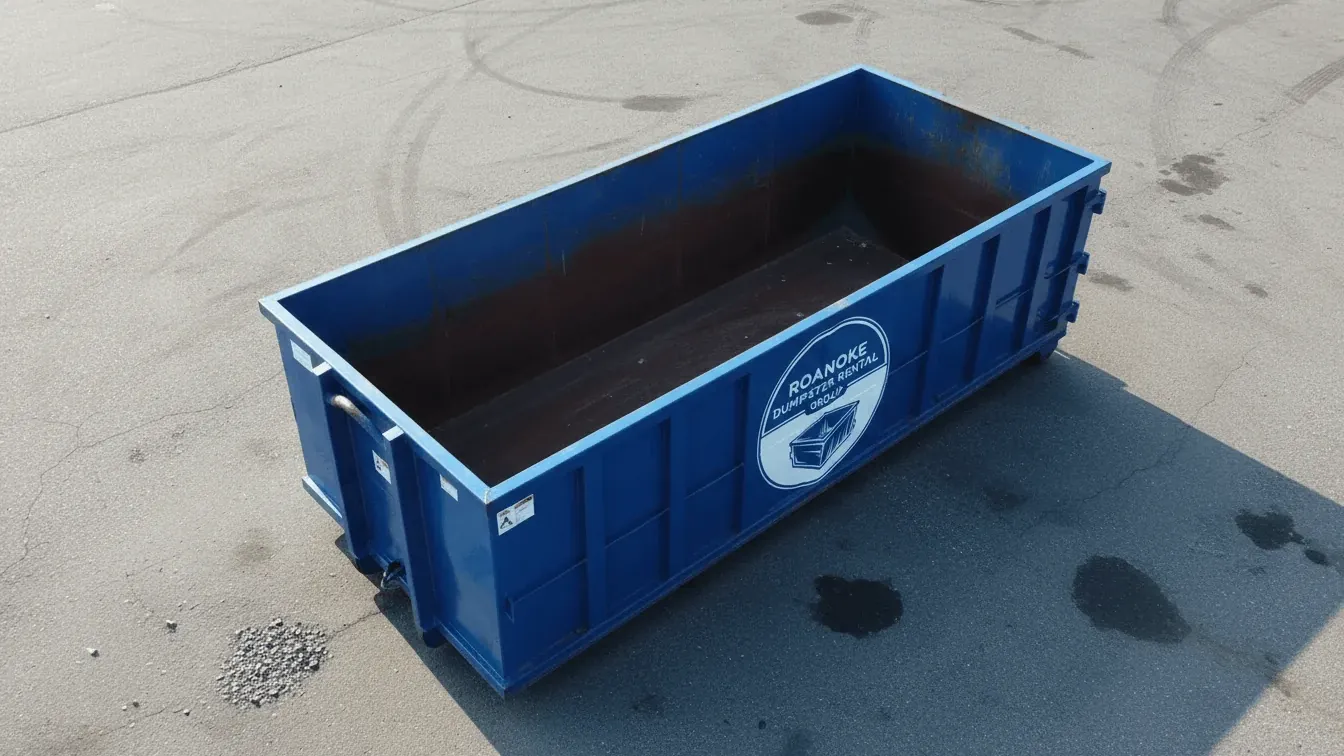
For heavy debris, the 10 yard is not the compromise, it is the correct tool. At roughly twelve feet long it fits a narrow or steep Roanoke drive where nothing longer will swing, it sits low so material goes in over the rim rather than up a ladder, and it reaches a lawful payload on dense material without becoming a container nobody can lift. A 15 yard suits a mixed job with real masonry in it, such as a bathroom stripped back with tile and a mortar bed. A 20 yard works when the masonry is only part of the load and the rest is airy, though even then it should be loaded flat rather than filled. Above 20 there is no size answer for heavy material, because weight, not volume, is the limit. Payload notes are on the container sizes page. Call and describe the pile.
10 Yard Dumpster
Concrete, block, brick and termite-rotted framing — and the box that fits a steep or narrow drive.
View this size →15yd³15 Yard Dumpster
A single room, a small tear-off, or one unit of a city rental turnover.
View this size →20yd³20 Yard Dumpster
A crawlspace and attic clear-out — the Roanoke default — or a multi-room remodel.
View this size →Placement On Karst Ground And A Grade
We place a heavy container more carefully than any other box we run, and there are two reasons. The first is the ground. This valley is karst and Roanoke County maps its own sinkholes, and Virginia Energy notes that subsidence is generally not covered by a standard homeowner’s insurance policy. A loaded box concentrates several tons onto four small contact points, so we look for solid, level ground and we double the boards under the rails on a heavy set. The second is the grade. Roll-off delivery works by gravity, and a container full of concrete is the hardest thing to recover back up a hillside drive, so we spot the set from the low side and square the truck to the slope. The fire code applies here as everywhere: any container of 1.5 cubic yards or more stays at least five feet from combustible walls, openings and roof eave lines under International Fire Code § 304.3.3, carried into Virginia by the 2021 Statewide Fire Prevention Code. See driveway protection for the surface side of it.
Not sure this is the right service? Describe the job on the phone and we will point you at the right container even if it is a different service page. Call (540) 685-0739.
Get a flat quote
Two minutes on the phone gets you a size, a price and a delivery slot. No forms.
(540) 685-0739Recommended sizes
How it works
Concrete & Heavy Debris in four steps
- 1
Call us
Tell us the project, your address and when you want it. Two minutes on the phone and you have a flat price.
- 2
We deliver
Our driver walks the drop, lays protection boards and sets the container exactly where you want it.
- 3
You load it
Take your time within your rental window. Keep it level with the top rail and we handle the rest.
- 4
We haul it
Call or text when you are done. We pull it, sort what can be recovered and dispose of the rest properly.
Concrete & Heavy Debris FAQs
Why can I only fill it partway?
Because the limit is weight and not volume. Concrete, brick, block, stone, mortar and tile in a mortar bed are several times denser than mixed household debris, so a container reaches its lawful payload long before the sides fill. A 10 yard loaded flat and low goes out at a legal weight, and the same rubble heaped into a 30 gives you a container that cannot be lifted or hauled, which costs everyone a morning and fixes nothing. Load in pieces two people can place, spread it across the whole floor rather than piling it at the door end, cut rebar and mesh back below the rim, and stop at the fill line.
Can I mix concrete with the rest of the job?
Only in small amounts, and it is usually worth not doing. A little broken concrete in a mixed load is fine. A driveway breakout in with the framing and the cabinets is a container that hits payload with half the job still on the ground, and then you pay for a second box anyway. Split by material from the start: masonry in a 10 or a 15 loaded flat, airy material in a 20 or a 30. It is consistently the cheaper arrangement rather than the more expensive one, and it is why we ask what the walls and the floors are made of rather than how many rooms are involved.
What about soil and fill?
Tell us before the container leaves the yard rather than after it arrives. Soil and clean fill are a different conversation from masonry rubble and mixing them limits where a load can go, so we want to know roughly what the split is at booking. Excavation here is unpredictable anyway, because the valley is karst and you meet rock and voids where the plans showed neither. If you are digging footings, name your locality when you check the frost depth: the local design criteria give 18 inches in the City of Roanoke and 24 inches in Roanoke County, Vinton and Salem. And submit a locate request to Virginia 811 before you break ground.
Is the ground under my driveway a problem?
Sometimes, and it is worth thinking about for ten seconds before several tons goes down on it. The Roanoke Valley sits in Virginia’s karst belt, where carbonate rock dissolves to leave caves and voids, and Roanoke County publishes a karst areas dataset built from mapped sinkholes. Virginia Energy warns that subsidence is generally not covered by a standard homeowner’s insurance policy. We are not going to tell you your drive is about to collapse, because that is not how it works either. We will pick the most solid, level spot available, board it properly, and keep the heavy box small.
Do you deliver on a steep driveway?
Usually, and the 10 yard is the reason we can. A roll-off comes off the rails under gravity and has to be pulled back up loaded, and a container full of concrete is the hardest recovery the truck does. A short box is easier to place, more stable standing still and more predictable on the cable. We walk the drive before anything comes off, spot the set from the low side and double the boards where the surface is asphalt. If the drive genuinely will not take it, we will look at the flattest ground on the property or, in the last resort, talk about a street placement and the permit that goes with it.
More services
Other things we haul
Residential Dumpster Rental
Driveway placement for the crawlspace, attic and basement cleanouts an older valley house produces.
Learn more →Commercial Dumpster Rental
Containers for businesses and contractors — the City of Roanoke does not collect construction debris.
Learn more →Construction Dumpster Rental
Mixed C&D in one roll-off, with next-day swap-outs across the Roanoke Valley.
Learn more →Roofing Dumpster Rental
Weight-rated cans sized by squares and layers, set five feet off the eave line.
Learn more →Roll-Off Dumpster Rental
10, 15, 20, 30 and 40 yard roll-offs across Roanoke, the county, Salem and Vinton.
Learn more →Same-Day Dumpster Rental
Call before the cut-off and we can usually get a container to you this afternoon.
Learn more →Junk Removal Dumpsters
Clear a crawlspace, attic, garage or basement on your own schedule.
Learn more →Estate Cleanout Dumpsters
Discreet, patient container service for families clearing a lifelong home.
Learn more →Demolition Debris Removal
Containers and fast swaps for porches, decks, sheds, garages and interior gut-outs.
Learn more →Yard Waste & Brush Removal
Separate clean loads for brush and clearance beyond what curbside will take.
Learn more →Where we deliver
Concrete & Heavy Debris across the Roanoke Valley and Southwest Virginia
Same service, same flat rates, every town below. Pick yours for local placement and permit notes.
Talk to a real person
Need concrete & heavy debris in Roanoke?
Tell us what you are clearing out and we will tell you the right size and the flat price to put it in your driveway. No forms, no waiting on an email — just call and we will sort it out in a couple of minutes.
Serving Roanoke, the Roanoke Valley and Southwest Virginia · Mon–Fri 6:30am–5pm, Sat 7am–1pm